Halloween Around the World: Spooky Food Traditions Worth Trying
From sweet breads and mysterious cakes to bone-shaped biscuits and comforting autumn dishes, discover how different cultures celebrate the spooky season through food.
When you think of Halloween, your mind probably jumps to carved pumpkins, trick-or-treating, toffee apples and bowls overflowing with sweets. But beyond the costumes and creepy decorations lies a fascinating world of food traditions, some dating back hundreds of years.
Across the globe, the end of October and beginning of November are marked by celebrations that bring together food, family, folklore and remembrance. From Mexico’s colourful Día de los Muertos festivities to Ireland’s fortune-telling fruit loaf, every culture has its own delicious way of embracing the season.
Whether you’re planning a Halloween party, looking for autumn baking inspiration or simply fancy trying something different, these spooky food traditions are well worth bringing into your kitchen.
- Mexico: Pan de Muerto – Bread of the Dead
Sweet, fragrant and full of symbolism.
In Mexico, the beginning of November brings Día de los Muertos, or Day of the Dead, a vibrant celebration honouring loved ones who have passed away. Although it falls around Halloween, it’s a distinct tradition, filled with colourful decorations, marigolds, candles and delicious food.
One of its most recognisable treats is pan de muerto, a beautifully soft, lightly sweetened bread traditionally flavoured with orange zest and sometimes anise.
What makes it particularly special is its decoration. Strips of dough are arranged across the top to resemble bones, while a small round piece represents a skull or the cycle of life. Once baked, the bread is often brushed with butter and sprinkled with sugar.
Try it at home: Bake individual pan de muerto buns, dust them generously with sugar and serve alongside Mexican hot chocolate infused with cinnamon. They’re perfect for a cosy autumn afternoon.
- Ireland: Barmbrack – The Cake That Predicts Your Future
A slice of Halloween fortune-telling.
Did you know that many of today’s Halloween traditions have roots in Ireland’s ancient Celtic festival of Samhain?
One of Ireland’s best-loved Halloween foods is barmbrack, a lightly spiced fruit bread packed with raisins and sultanas, often soaked in tea before baking.
But there’s a mysterious twist!
Traditionally, small symbolic objects were hidden inside the loaf, with each one supposedly predicting something about the person who discovered it.
- A ring: Marriage or romance was on the horizon.
- A coin: Good fortune and wealth were coming.
- A piece of cloth: Financial difficulties might lie ahead.
- A thimble: Traditionally associated with remaining unmarried.
These days, many commercially made barmbracks include just a ring, and any hidden charms should be food-safe and carefully managed to avoid choking or injury.
Try it at home: Serve thick slices of toasted barmbrack with salted butter and a steaming cup of tea. For a Halloween gathering, replace hidden objects with fortune cards placed beside each slice.
- Italy: Ossa dei Morti – Bones of the Dead Biscuits
Deliciously creepy biscuits with a fascinating history.
Italy has its own collection of sweet traditions associated with All Saints’ Day and All Souls’ Day on 1 and 2 November.
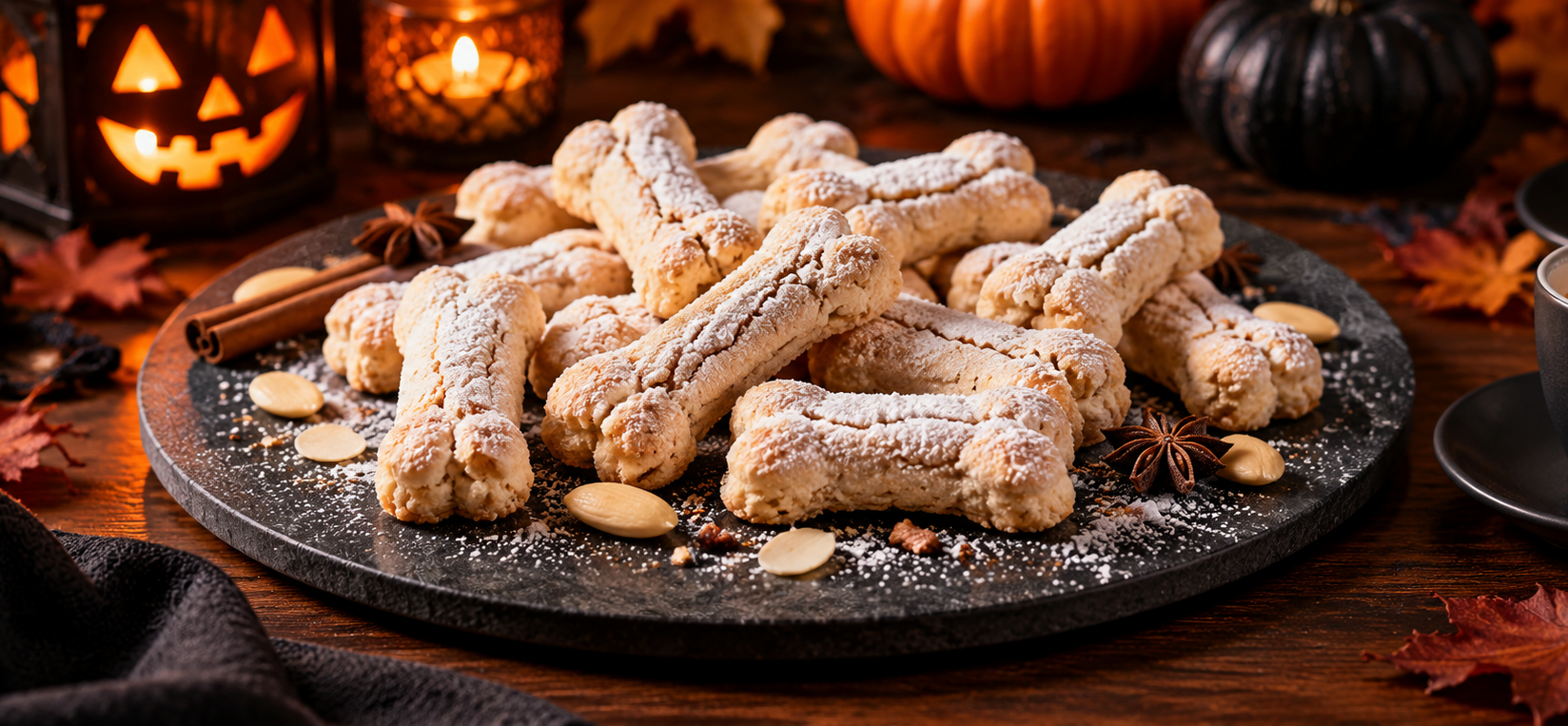
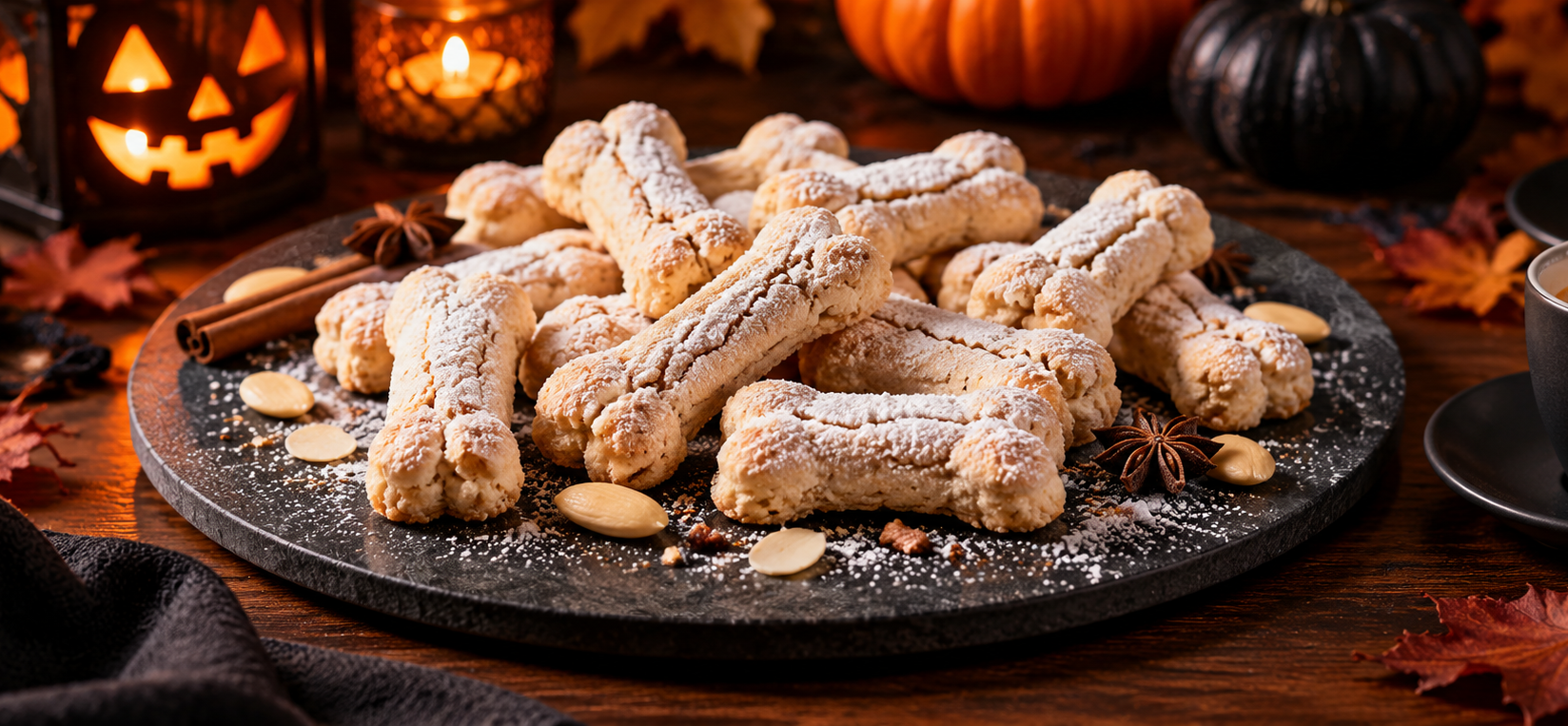
Among the most intriguing are ossa dei morti, meaning “bones of the dead”.
These traditional biscuits vary from region to region, but many versions are made using almonds, sugar, flour and warming spices such as cinnamon or cloves. Their pale, irregular shapes are designed to resemble little bones.
Some varieties are wonderfully crisp, while others have a harder exterior and a slightly softer centre.
Despite their spooky appearance, these biscuits are traditionally associated with remembrance rather than fright.
Try it at home: Make a batch of almond and cinnamon bone-shaped biscuits and arrange them on a dark serving platter. Add a little icing sugar for an extra ghostly finish. They’re ideal alongside an after-dinner espresso.
- Portugal: Pão-por-Deus – Treats for the Soul
A tradition that might remind you of trick-or-treating.
In parts of Portugal, children celebrate Pão-por-Deus, meaning “Bread for God”, on 1 November.
Traditionally, children go from door to door asking for small gifts of food, often carrying decorated bags. In return, they might receive bread, cakes, nuts, sweets or seasonal fruits.
Although it has a different religious and cultural background, the tradition shares an interesting similarity with modern Halloween trick-or-treating.
Traditional treats can include small sweet breads flavoured with ingredients such as cinnamon, raisins and nuts.
Try it at home: Bake miniature spiced fruit buns and create little Halloween treat bags filled with homemade biscuits, dried fruit and chocolates. They make lovely alternatives to shop-bought sweets.
- Austria: Allerheiligenstriezel – A Beautifully Braided Bread
A golden loaf made for sharing.
In Austria, All Saints’ Day is traditionally associated with Allerheiligenstriezel, a beautifully braided sweet yeast bread.
Soft, golden and often enriched with butter, eggs and raisins, this festive loaf has long been given as a gift, particularly by godparents to their godchildren.
Its intricate braided shape makes it a real centrepiece, while its delicate sweetness makes it perfect for breakfast, afternoon tea or dessert.
Unlike some of the more obviously spooky foods on this list, Allerheiligenstriezel is all about generosity, family and seasonal traditions.
Try it at home: Bake a large braided loaf, glaze it until beautifully golden and serve warm with butter, honey or homemade plum jam. Leftovers make fantastic French toast the following morning.
- Japan: Kabocha Pumpkin Treats – A Modern Halloween Favourite
Where Halloween meets adorable seasonal creativity.
Halloween isn’t a traditional Japanese festival, but it has become increasingly popular in Japan, particularly through themed events, decorations and imaginative seasonal treats.
Japanese bakeries and cafés embrace the occasion with everything from ghost-shaped pastries and black sesame desserts to pumpkin puddings and beautifully decorated cakes.
One ingredient that frequently takes centre stage is kabocha, a Japanese winter squash with a naturally sweet, nutty flavour and a rich orange flesh.
It’s particularly delicious in creamy puddings, cheesecakes and soft pumpkin cakes.
Try it at home: Create individual kabocha pumpkin cheesecakes topped with whipped cream and little chocolate spiderwebs. Alternatively, make pumpkin-shaped steamed buns for a playful Halloween afternoon tea.
- The Philippines: Pangangaluluwa and Kakanin – Food, Family and Remembrance
Sweet rice treats with a meaningful connection.
In the Philippines, Undas, the period around All Saints’ Day and All Souls’ Day, is an important time for remembering departed loved ones.
Families often gather, visit cemeteries and share food as part of the occasion.
An older tradition known as pangangaluluwa involves groups visiting homes and singing on behalf of souls, sometimes receiving food or money in return. The custom survives in some communities.
Traditional Filipino rice-based delicacies, collectively known as kakanin, are popular foods for family gatherings and can be enjoyed during this period.
These include biko, a rich, sticky rice cake made with coconut milk and brown sugar, and suman, sticky rice parcels often wrapped in banana leaves.
Try it at home: Make coconut sticky rice squares with a glossy caramel topping. Cut into bite-sized portions and serve on a sharing platter for an autumn celebration with a difference.
- United Kingdom: Soul Cakes – The Original Halloween Treat?
A little spiced cake with centuries of history.
Long before supermarket shelves filled with Halloween chocolates, parts of Britain had a tradition known as souling.
Around All Souls’ Day, people would visit homes offering prayers for the dead in exchange for small cakes known as soul cakes.
These little round treats were often made with flour, butter, sugar, dried fruit and spices, sometimes marked with a cross on top.
The custom is one of several historical traditions often discussed in connection with the development of modern trick-or-treating.
Soul cakes are wonderfully simple to make and have a comforting flavour reminiscent of spiced biscuits and traditional fruit scones.
Try it at home: Bake small cinnamon and nutmeg soul cakes with currants, and mark each one with a cross before baking. Serve with warm apple cider or a mug of spiced apple juice.
Bring the World’s Halloween Traditions to Your Table
Why settle for the usual bowl of sweets when you could turn Halloween into a delicious journey around the world?
For something a little different this year, host an Around the World Halloween Tasting Night, with each dish inspired by a different country’s seasonal traditions.
Start with Italian bone-shaped biscuits, add slices of Irish barmbrack, serve Mexican pan de muerto with hot chocolate and finish with Japanese pumpkin cheesecake.
Create a colourful buffet with small tasting portions, autumnal decorations and little cards explaining the story behind each dish. It’s a brilliant way to introduce children and adults alike to new flavours and fascinating cultural traditions.
For a more interactive celebration, turn it into a Halloween baking afternoon. Let everyone decorate their own spooky biscuits, shape miniature bread rolls or create pumpkin-themed desserts.
And remember, not every Halloween-inspired dish needs to be sweet. A warming pumpkin soup, roasted squash tart or hearty autumn stew makes a wonderful addition to your seasonal spread.
A Halloween Feast Full of Stories
Halloween and the surrounding autumn celebrations are about much more than ghosts, costumes and sweets. Across different cultures, food has long been a way to bring people together, celebrate the harvest, remember loved ones and pass traditions from one generation to the next.
From the symbolism of Mexican pan de muerto to the playful predictions hidden in Irish barmbrack, every recipe tells a story.
So this Halloween, why not try something new? Swap a few familiar treats for flavours from around the world, discover the traditions behind them and create a spooky seasonal feast that’s as interesting as it is delicious.
After all, the best Halloween treats come with a little history, a touch of mystery and plenty of flavour!