The Smart Way to Prep Food
Meal prep can be a genuine game-changer—especially once you stop treating it like you’re signing up to eat the exact same lunch seven times in a row. Most people don’t quit meal prep because they “lack discipline”; they quit because it gets boring, repetitive, and weirdly stressful. The easiest upgrade is shifting from full pre-made meals to flexible meal components—simple building blocks you can mix and match all week so lunches and dinners stay quick, fresh, and actually appealing.
Prep components, not full meals
Instead of cooking “Monday–Sunday chicken-and-rice,” use one prep session to make a few versatile basics that can become bowls, wraps, salads, stir-fries, and plates. Think of it like stocking a mini salad bar or takeaway counter in your fridge: you’re not committing to one meal, you’re stocking options.
This approach is especially helpful because it:
- protects variety (so you don’t get food fatigue by Day 3),
- keeps things tasting fresher (components hold up better than fully dressed meals),
- and cuts weeknight effort down to assembly-level cooking.
The simple component formula
The goal isn’t a perfect system—it’s a small, repeatable structure that gives you enough variety without making prep complicated.
Aim for:
2 proteins
Pick two that you genuinely like and that work in multiple cuisines.
- Examples: chicken thighs + tofu, mince + salmon, turkey + lentils, eggs + prawns
Tip: choose one “neutral” protein (easy to season different ways) and one that’s already strongly flavoured (like salmon or spiced mince) for built-in variety.
2 carbs
Choose one that’s great hot and one that works hot or cold.
- Examples: rice + potatoes, quinoa + noodles, couscous + wraps
Tip: carbs are your “base” and your “mood changer.” Rice feels like a bowl; potatoes feel like dinner; noodles feel like takeaway; wraps feel like lunch-on-the-go.
3 veg
- one roasted (warm, caramelised, filling)
Roasting concentrates flavour and makes veg feel “meal-y.”
Examples: broccoli, cauliflower, peppers, courgette, carrots, squash, red onion. - one fresh/crunchy (texture + freshness)
This is what stops meal prep tasting like leftovers.
Examples: cucumber, shredded cabbage, radish, carrots, peppers, sugar snap peas. - one leafy (fast salads, bowls, wraps)
Leafy veg lets you build meals in 60 seconds.
Examples: spinach, rocket, mixed leaves, kale (massage if using raw), shredded lettuce.
2 sauces
- one creamy (rich + comforting)
Examples: tahini yoghurt, hummus-thinned dressing, peanut sauce, ranch-style yoghurt, avocado-lime. - one acidic (bright + punchy)
Examples: vinaigrette, chimichurri-ish sauce, lemon-herb dressing, salsa, pickled chilli + lime.
That’s it. With those in the fridge, you’re not “eating leftovers,” you’re building meals.
Why this works (and why it’s easier)
More variety, same effort. You cook once, but your meals don’t feel like repeats because the combinations change. Even just swapping sauce + base can make the same protein feel totally different.
Less waste. Components are designed to overlap. That bag of spinach isn’t “for one recipe”—it gets used in bowls, wraps, side salads, and quick sautés.
Faster lunches and dinners. When you’re tired, the hardest part is starting. If dinner is “heat protein + grab veg + add sauce,” you’ll actually do it.
It adapts to real life. If you go out one night or plans change, components still work. Full meals often end up soggy or forgotten; components stay usable.
Example mix-and-match combos (using the formula)
Here are a few ways the same set of components can become totally different meals:
- Rice + chicken thighs + roasted veg + leafy greens + acidic sauce
= quick grain bowl (bright, fresh, satisfying) - Noodles + tofu + crunchy veg + creamy sauce
= cold noodle salad (great for lunch, especially if you keep sauce separate) - Potatoes + salmon + leafy greens + acidic sauce
= simple plate dinner (feels like “proper dinner” with minimal effort) - Quinoa + mince + roasted veg + creamy sauce
= hearty meal-prep bowl (comforting and filling)
And a few more to make it feel even less repetitive:
- Wrap + chicken + crunchy veg + creamy sauce = fast lunch wrap
- Leafy greens + quinoa + tofu + crunchy veg + acidic sauce = big salad that doesn’t feel sad
- Rice + mince + leafy greens + acidic sauce = “taco bowl” vibes (add a sprinkle of cheese if you want)
- Potatoes + roasted veg + tofu + creamy sauce = warm “traybake-style” bowl
- Noodles + salmon (flaked) + leafy greens + acidic sauce = quick “poke-ish” bowl
Practical tips so it stays easy
Keep sauces separate. Sauces are the difference between “fresh” and “soggy leftovers.” Store them in small jars so you can change the flavour day-to-day.
Season proteins simply, finish with sauce. If you heavily flavour everything during prep, you lock yourself into one cuisine all week. A lightly seasoned protein becomes Mediterranean one day, Asian-inspired the next, etc.
Use “fresh” veg as your reset button. Even if you reheat everything else, adding crunchy cucumber/cabbage/peppers instantly makes it taste like a new meal.
Storage systems that actually work
Good storage is what makes component meal prep feel effortless instead of chaotic.
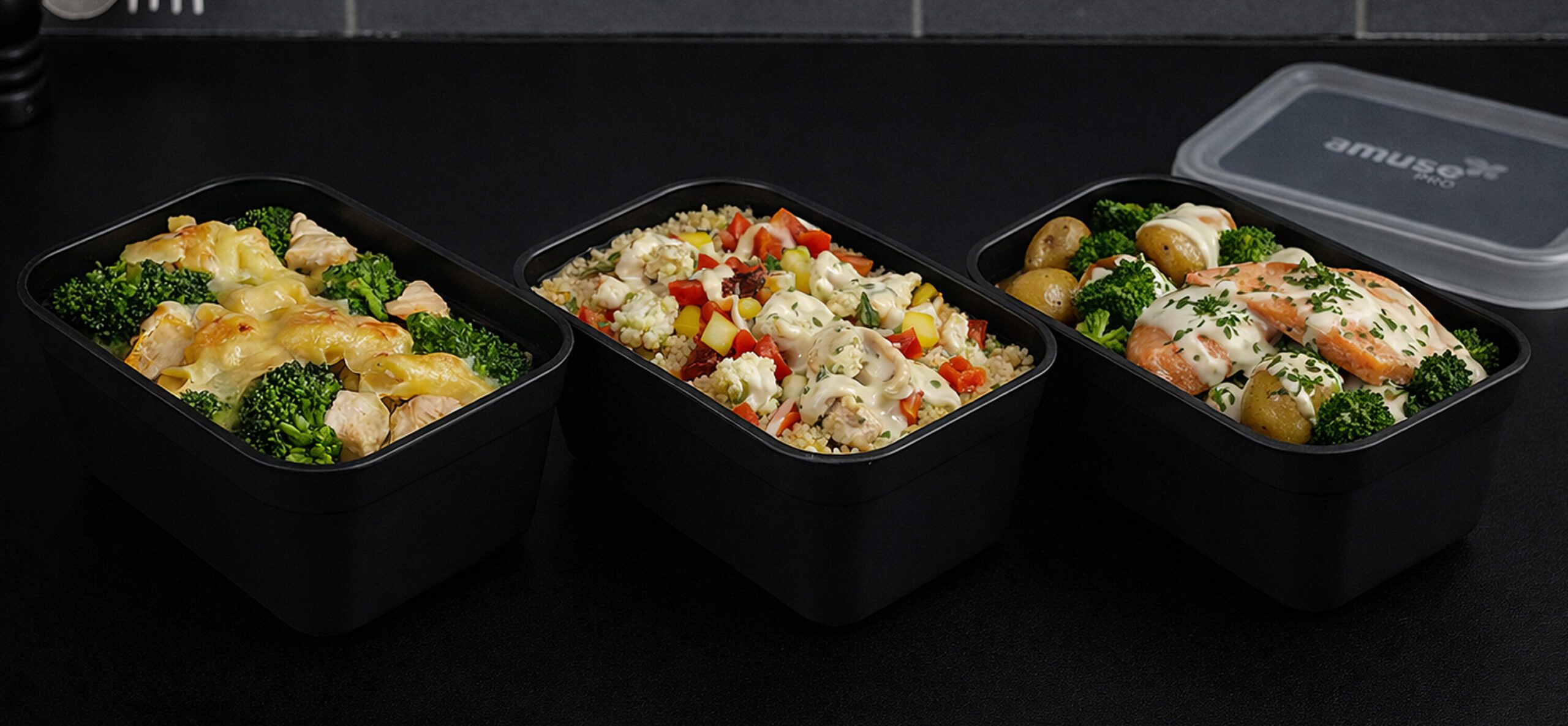
- Use wide, shallow containers so food cools quickly (safer, and it helps avoid condensation that makes things soggy).
- Label with date + what it is (you’ll be shocked how fast “mystery container” happens).
- Front row = eat first rule. Put the oldest stuff where you’ll see it, not hidden at the back.
- Group by type. One shelf for proteins, one for veg, one for carbs, sauces in the door—less rummaging = more use.
Food safety basics: cool food quickly, refrigerate promptly, and reheat thoroughly. (If something smells off or looks questionable, bin it—no heroics.)